Showing posts with label Canadian history. Show all posts

Wednesday, February 25, 2015

Learning About the CPR by Sophia

This term I have learned a bit more about the Canadian Pacific Railway.
The railway was important because Alberta and Saskatchewan were not part of Canada yet, kind of like no-man's-land. So the CPR -(who also owned the steam boats)- decided to make a deal so that you could buy:
  • a steam boat ride from England
  • a train ticket from Newfoundland to Alberta/Saskatchewan
  • and one acre of land for $2.50 as long as you worked the land.


The railroad was part of a promise to British Columbia to enter confederation. So, the rest of what was Canada at the moment said to B.C. at that moment, "You can be part of Canada and we promise to provide transportation between us and you guys."

In the video "BC's Early Years" I learned it was really, really, really hard to build the railway because they had to work with lots of explosives to level out the ground and make tunnels so that he railroad would be easier to build and the trains going on the track wouldn't have burn so much coal.

But this was very, very dangerous and most of the workers were imported from China. Unfortunately for every mile of track that was laid out, 4 chinese men died. Some of them died from explosives, some of them died from scurvy, because to remind them of home they ate only fish and rice, and some of them died of being worked too hard. They weren't treated well or appreciated or honoured. The white men thought themselves better than the Chinese, kind of like they did with the First Nations. Sad, isn't it?

I'm reading the Dear Canada book "A Ribbon Of Shining Steel" and it's the diary of a girl who lived while the CPR was still being built in Yale, B.C. and her father would be away for long stretches of time, like a week, and she would lay awake in bed every night hoping that her father hadn't died in the past few days. Her father would always come home telling stories of how more and more Chinese died and he thought it was so unfair they were treated so unfairly.

We are also reading the Laura Ingalls Wilder book "On The Shores Of Silver Lake" and the railroad plays a part in that book because Laura and her family have only ever been transported in wagons up until then, and the train is this new wonderful invention to transport lots of people and cargo over land so extremely fast that a journey that used to take a covered wagon a whole day of steady going, only 30 minutes. Laura felt nervous about going on the train because it was a new invention and there were sometimes minor/ major setbacks, like trains running off the tack and huge train crashes and people dying, so she was kind of scared of going on the train the first time and every thing was all right.

In that book her Pa is working at  the store for men working on railway grade and the railway grade is when you smooth out the land you're about to build railway tracks on so that the trains don't have to burn more coal.


The first transcontinental passenger train departed from Montreal and arrived at Port Moody at noon on 4 July 1886.  Now at our new house we live really close to Port Moody and my Papa and I are going to visit that train station at Spring Break.
By that time, however, the CPR decided o change up the location of the train station from Port Moody to Granville, which was renamed "Vancouver" later on that year. The first official train destined for Vancouver arrived on 23 May 1887.
We went to visit engine number 374 at the Roundhouse in Yaletown, the engine that puled the first official train destined for Vancouver.


It was cool and there were a few old geezers there and I didn't really understand what they were saying, but it seemed like a nice chance to talk to them and basically they just said what I already knew about the CPR, but it was kind of nice.

The CPR is important in Canada's history because it was kind of the reason that Alberta and Saskatchewan are a part of the country today. The railroad joined the country together. Whhhopie!!!!


Tuesday, February 24, 2015

Girl Guides Badge: "Heritage" by Sophia


  • For my heritage badge I was asked to show I knew about several generations of my family thus the resoning for this family tree.

  • I was also asked: How did you get your name? Find out the meaning of your first, middle or family name. If you could pick your own first name, what would it be? Why? What is a birthstone? Which one is yours?
My name is Sophia Joanna Jubilee Pallister. Sophia means wisdom, Joanna means God is gracious, and Jubilee means celebratory freedom. My mum named me Sophia because it was her favourite name. The reason why my Mum's first name is my second name is because my Mum's side of the family has a naming tradition where the first born son/daughter of the family has their second name be the Mum or Dad's first name. I am called Jubilee because in the bible, every seven years there was a year of rest, where nobody would do their hard, everyday work and every slave was set free and debts were forgiven, and the entire year was one huge party. My parents named me this because I was the 7th grandchild on my mum's side, I was born in my parent's 7th year of marriage, and I was born on August 27th.
If I could choose my own first name it would be either Ever or Kei (pronounced kee).
This is because I think these names are rare, and unique. Just like me. And a birthstone is a mineral or gem representing the month of your birth. I was born in August, so my birthstone is the peridot, witch is a light green gem. 

  • I was asked to: Make a toy, cook a special dish or learn a game, song or dance that your ancestors might have enjoyed.
I made trifle, an English dish with my Granny, that she makes every year at Christmas. It mostly consist of cake, jello, and fruit, whipping cream, custard and sprinkles. She makes a different way from my auntie. It used to be a dish to use up all the leftover dessert ingredients, but now we do it as a family tradition. 


  • Visit or find out about a National Park or National Historic site. Explain why it was created and how it is used today.

Me and Eleanor went to Fort Langley, a national history site that was the place BC was founded.In 1923, the Canadian government designated Fort Langley as a National Historic Site and erected a commemorative plaque near the storehouse. At this time, the site consisted only of the one building and 1-acre (4,000 m2) of land. From 1931 to 1956, the Native Sons and Daughters of British Columbia operated a museum out of the storehouse. Parks Canada took control of the site in 1955, and a joint Federal-Provincial program reconstructed three buildings in time for the centennial of the founding of British Columbia in 1958. In 1978, the site became a national historic park, and has consisted of 8.5 hectares (21 acres) since 1985.
  • Read and aboriginal story (First nations, Metis or Inuit)
I have read two aboriginal stories so far: How Raven Stole The Sun & The Legend Of Lightning And Thunder.
  • Discover a Canadian who has contributed to Canadian culture in the past or present. Create a story, song or poem about this Canadian.

I wrote this haiku about Bill Reid:
Just look at a log
Think about what it could be
Art in the making


  • Visit a museum, historical society, historic building, cemetery or town hall to learn more about your heritage.

It's kind of hard to go somewhere to learn about my personal heritage because i'm mostly british so instead I learned about what aboriginal life was like.

Fine Arts

I am taking violin this term for FA (I believe in practicing violin and doing ballet at the same time)

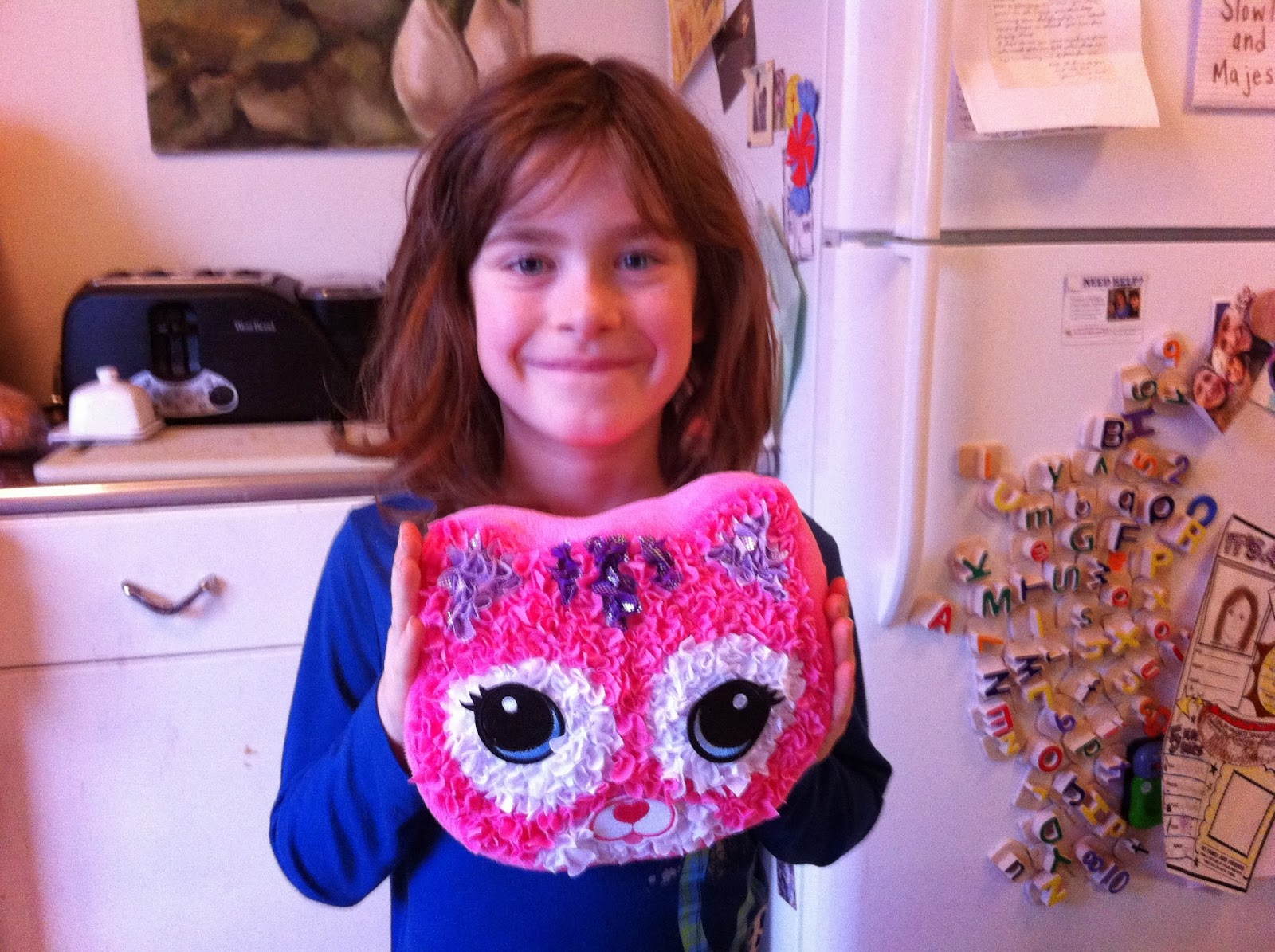
And at x-mas Eleanor got a kitty pillow making kit and made the above

We also LLLOOOOVVE to draw so we also LLLOOOOVVED it when we got to draw our favourite totem poles at the MOA (museum of anthropology) 
Eleanor also drew this picture of Luara Ingalls Wilder to celebrate her Birthday this month

And I made this night gown this term too!

And Eleanor is taking piano lessons to top it all off
so basically we think FINE ARTS IS AWESOME!!!!!!!!!!!!!!!! :D


Friday, February 20, 2015

Rights and Responsibilities and Fort Langley by Eleanor

Right now I am talking about rights and responsibilities. I'll tell you the difference of this rights and responsibilities at this talk show. Wait, who said this was a talk show? I didn't even know it was a talk show.

Back to the point. A right is something that you SHOULD be able to have and do. Like you have the right to take out books from the library, but you have the responsibility to bring them back and take care of them. or, you have the right to be free and play on the playground, but you have the responsibility to pick up garbage on it and not leave garbage on it,  and also not climb over the fence, and follow the rules.


I went to Fort Langley,  and I played a piano and I wore some really cool old fashioned clothes, and I played Heart and Soul on the piano. I am in the Big House.


The Big House is the place where the guy in the big blue coat (who I am dressed up as, you can see in the picture) Gov James Douglas, he's declaring that British Columbia was a province - they were clinging to the rest of Canada, like a bug, like a moth to a wool sweater. I read the proclamation declaring BC a province.


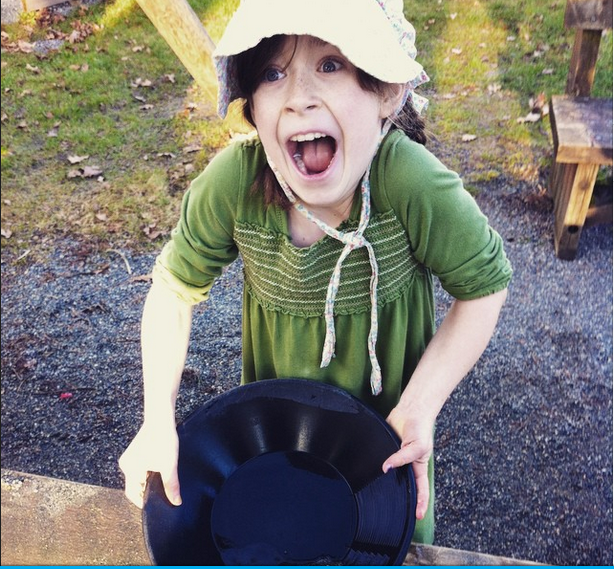
Sorry my Mum cut off the gold in this picture but I got gold!!!!! Two whole great pieces Mister! That was where the gold rush was and I went crazy for gold!!!


This is Hazel with me in this picture, she is a very nice First Nations oman and she loved my bunny and it was really nice meeting her, she showed me how to make a barrel. And I really really liked it.

I asked Hazel about the rights and responsibilities of the kids who were at Fort Langley back when it started. We learned there were no schools, all of the kids did work, but they didn't carry yokes, man, I wanted to carry a yoke. There were no white kids there, because all of the white men married First Nations women  and so the kids were Metis, which means you are half white and half first nations.

Some of the things the kids did were, carved holes in stones with other rocks to make weights for fishing nets, and they helped their Mums and did stuff around the house and milked cows and things.


Here is Hazel holding Ittle, it was really cute. she told us about being taken away to residential school, where she had no rights, she was not even allowed to go to her brothers and sisters if they fell down or cried. She trieds to think more about happiness and hopoe.

Wednesday, February 4, 2015

Brownie Badge: Aboriginal Peoples Of Canada by Eleanor

The name of some of the First Nations people who used to live near our home (and some still do) are the Musqueum, Coast Salish, Kwakwaka'wakw and the Haida people.

The name of an aboriginal folk tale was How raven Stole the Sun and Canibal.


This is me at a visit to the UBC Museum of Anthropology. I was sketching a picture of this statue. 


This is a bear statue and it was carved by Bill Reid. He is a famous wood carver from the Haida people. It is a bear. And in Haida culture a bear is almost like a human and they treat bears like a very special guest and if they kill a bear they sprinkle eagle feathers on it to show, like, respect! honour! we like this bear!


This is my drawing of the Bill Reid carving "Bear".


I  have used an Aboriginal invention, it is the toboggan. Amazing, Invention! Love it! Amazing for snow.

The Aboriginal game I like, doesn't have a name that I know. You have to crouch down in a squat and you do that with a bunch of other people, and you sing an Aboriginal song, if you don't know one just go, "ahhh nay nay nooo" or something, and the point of it is just for fun, and what happens is you jump on your toes while you sing the song and stay squatting, and the point is that you want to be the last person still squatting and if you fall over, you're out. Sorry, kid, you're out.


Monday, November 17, 2014

Spies and Remembrance Day by $ophia


I've been doing a unit study on spies and the Canadian wartime spy camp,  Camp X. Some of my favourite things I've loved learning about are the codes, ciphers and secret messages.


Also, when it was Remembrance Day we had a Remembrance Day time where we made a family tree of some of the people in our family who served in the wars.

Drawing pictures to remember our Great Uncle Joseph Pallister, who died in Belgium in WWII.


Eleanor represented the Brownies and laid a wreath at the cenotaph.

Our great-grandparents, who served in WWII.


After was had researched our family tree, we were wondering what some of the women's jobs in the war. Later that day when we went to the parade with our Girl Guide and Brownies troops, Eleanor and Mum talked to a lady from the legion, and she reminded my Mum about code breakers. In WWII, some women were secretly hired to be special secret agents to intercept codes from the Germans during second world war. and helped to break the all-awesome Enigma code. The Enigma machine was a machine slightly a typewriter. You wrote down what you wanted to say in english and then it would come out in a complex secret code.The British only managed to crack these codes when they stole a German Enigma machine and were able to use it in reverse to crack the codes.


Wednesday, May 28, 2014

Fort Langley!


I visited Fort Langley this term to lear about early settlers to BC. It is very interesting there, and I learned a lot about early settlers in BC. I learned how to make a yummy  treat called cranberry bannock. They put cranberries because they had a whole of cranberries there.


Back in the day, white people were encouraged to marry Fist Nations to make a family bond and community, so that happened at Fort Langley sometimes.


Eleanor pretended to milk a cow, and thy had a huge farm at Fort Langley that fed a lot of people.

Monday, May 26, 2014

The Land Of The N'kmip by Sophia


I went to a resort on a First Nations reserve in Osoyoos.  In Osoyoos, because of the desert mountain ranges, it makes a small microclimate that allows all the grapes in the vineyards to grow. 


This is me at a beach down the street from the resort.


This is me talking to an old lady at an old First Nations village where everything is old. Behind her is a very old pit house, which is a house that Okanagan people lived in in the winter.


This is the old sweat lodge in the village. 


This is an old teepee in the village that they lived in in the summer.


This is he old lady driving us back to the resort in a very new golf cart.

Wednesday, February 5, 2014

The making of Eliza Loverige: by Sophia

This is me and my doll Eliza. In Grade 4 Social Studies we learn about Canada's early settlers and I read the book Dear Canada: Winter of Peril - The Newfoundland Diary of Sophie Loverige.

I wanted to do something more interesting than just a paper report, so I made this doll. In the book, Sophie has a doll named Eliza just like this. I did research about what dolls in the 1700s would be like. Sometimes they had entire rooms just for little girls dolls! The head for her doll would have been made of china, or wax, or wood. But we couldn't do something as fancy as that, so we just made a plain old rag doll.

We used instructions from a website called www.instructables.com. Here is a link to the instructions I used. 

Why the doll was important in this story is because the doll Eliza in the story sort of connected Sophie to an aboriginal girl Sophie saw. The girl was a Beothuk girl. The Beothuk is a tribe that was the only tribe that was completely wiped out by Residential Schools.  Off the white board! (If you want to know what I mean by "off the white board", watch my report on Residential Schools here.)  Sophie gave her doll Eliza away to the little Beothuk girl.

My Mum is helping my type this and she wrote "Sophia" instead of "Sophie" and I said remember it's Sophie, not Sophia. Then I said, "I can't give my doll away to a Beothuk, because there is none left." And that makes me feel very sad.


I loved making the doll because I love sewing. I feel like I am getting better at using the sewing machine. The arms and legs were the hardest part. I thought it was really cool I was making a doll. I keep Eliza on my bed every day.